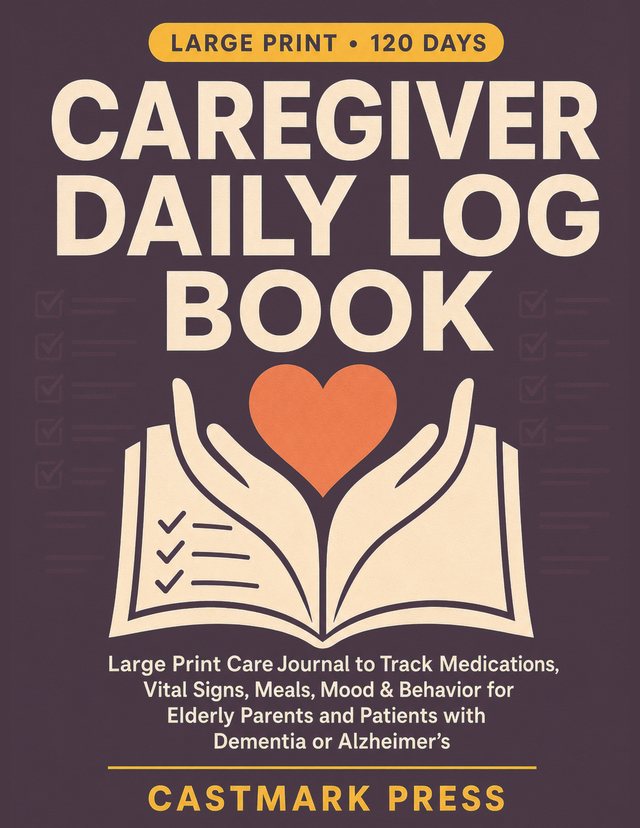
Write for the next person, not for yourself. Record what happened plus what you tried and what came of it, initial every handoff, and keep one book rather than four sets of notes. The failure mode in shared care is not conflict — it is four people each holding a different quarter of the picture and nobody holding the whole.
Care is rarely one person for long. A sibling takes weekends, a paid carer comes three mornings, a spouse covers everything in between, and a neighbour helps on Thursdays. Each of them sees a portion of the week and forms a picture from it.
The trouble is that four partial pictures do not add up to a whole one on their own. The sibling who visits on Sundays genuinely believes things are fine, because Sundays are fine. The person who covers the weekday evenings genuinely believes things are deteriorating, because evenings are where the deterioration shows. Both are reporting accurately and neither is describing the week.
This is a solvable problem, and it is solved by writing rather than by talking. Here is what a shared record has to do that a personal one does not.
A personal log can be shorthand, because you supply the context when you read it back. A shared log cannot, because the person reading it was not there.
The practical test is simple: would someone arriving cold be able to act on this entry? "Difficult morning" fails it. "Refused the morning tablets twice, took them at 11 with breakfast" passes it, because the next person now knows what to try.
So record the action and the outcome, not the feeling. Not because your feelings do not matter — they matter a great deal, and there are better places for them — but because the next person needs something to do at eight tomorrow morning.
The same applies to things that went well. "Good day" tells the next shift nothing. "Walk after lunch, settled all afternoon" tells them what to try.
The most common failure in shared care is not disagreement. It is a record spread across a notebook in the kitchen, one person's phone, a group chat, and a paid carer's own agency notes — with no single place that holds the week.
Keep one book, physically, in the house where the care happens. Everyone writes in the same one. That sounds low-tech next to a shared app, and in practice it wins for a specific reason: the paid carer, the neighbour and the eighty-year-old spouse can all use a book, and the shared app usually ends up being used by whichever family member set it up.
It also means the record is where the care is. A log on someone's phone is not available to the person who arrives at seven in the morning.
And keep it visible rather than tidied away. A book in a drawer is a book that gets filled in by one person.
Two seconds, and it answers a surprising number of later questions. When something comes up three days on — when did this start, who saw it, was she like this on Tuesday — knowing who was there is often the whole answer.
It also does something less obvious and more useful: it makes gaps visible. If nobody has initialled Thursday afternoon, then either nobody was there or nobody wrote anything, and both of those are worth knowing about before they become a pattern.
Add a line at the end of each shift for the next person — not a report, one or two things. What to watch for. What was tried. What is different today.
That handoff line is the difference between a log and a conversation, and it is the single habit that most reduces the same question being asked four times.
Different people are reading it for different reasons, which is why one general record beats four specialised ones.
| Who | What they need from it | So record |
|---|---|---|
| The next shift, in a few hours | What just happened and what to expect | Medications given or refused, mood, what was tried |
| The family member who visits weekly | What the week actually looked like | The ordinary days, not only the incidents |
| The paid carer arriving cold | What is normal for this person | Routines, preferences, what settles them |
| The clinician, in a month | Patterns with dates | Times, proportions, incidents with what preceded them |
| The person who has to decide something | What has changed over time | Consistent entries, so change is visible |
| You, at 11pm, exhausted | To be able to write it in two minutes | Short lines — one line is a record, a blank page is not |
It prevents the recurring argument about whether things are getting worse. When a family disagrees about that, they are usually disagreeing about different days rather than about the facts, and a shared record replaces two impressions with one week.
It prevents the medication confusion that arises when two people each believe the other gave the evening dose.
It prevents the visiting relative's blind spot, gently and without anyone having to be told they are wrong. Reading a fortnight is more persuasive than being contradicted.
What it does not solve is the distribution of the work, and it is worth being clear about that. A log makes visible how much is being done and by whom, which sometimes surfaces a conversation a family has been avoiding. That conversation is not a failure of the log; it is usually overdue. But do not expect a record to have it for you.
One more thing it does not do: it does not replace the agency's own chart. Paid carers record what they did on their own shifts, in their own system, for their own reasons. Your log covers the whole day — the evening, the night, the weekend, and the hour after the carer leaves — which is where a great deal of what matters happens.
Agree three things at the start and the rest looks after itself. Where the book lives. That everyone writes in it, including the paid carer if their employer permits. And that the end-of-day entry is the habit, not continuous note-taking — most people who sustain a log write it once, at a fixed moment, in a few minutes.
Use something undated. In a household with several carers, someone will always miss a day, and a dated planner full of blank spaces becomes a reproach that stops being opened. Undated pages mean the record simply continues on the next spread.
Keep it large print and simple enough that the least confident writer in the household will use it. A log that only the most organised family member fills in is a personal log, not a shared one — and it will show one quarter of the week again.
And take it to appointments. The value of everyone writing in one book becomes obvious the first time a clinician can see the whole week instead of the part that one person happened to witness.
Agree one book, in the house, where the care happens, and have everyone write in it — including paid carers where their employer permits. A shared app usually ends up being used only by whoever set it up.
One or two things the next person needs: what was given or refused, what was tried and whether it worked, and anything different about today. Add your initials — when a question comes up three days later, knowing who was there is often the answer.
No. The agency records what it did on its own shifts. Your log covers the whole day — evenings, nights, weekends and the hour after the carer leaves — which is where most of what a clinician needs to know actually happens.
Hand them the book rather than the argument. They are usually reporting their day accurately; a fortnight of entries shows them the other six days without anyone having to be contradicted.
Use an undated book so the gap costs nothing, and keep the daily entry short enough that it survives an exhausting day. One line is a record. A blank page is the only entry that helps nobody.